Pinterest traffic is weird.
It’s not like Instagram where you post, get a quick spike, then it’s gone. Pinterest is more like… planting little SEO seeds. Some die. Some sit there for weeks doing nothing. Then one random pin wakes up and starts sending sales at 2am like it’s been working a night shift.
But here’s the part people don’t say out loud.
A lot of Pinterest advice is basically “post pretty pins” and hope for the best.
If you want pins that actually convert to Etsy orders, you need a funnel. A simple one, but still a funnel. And you need your pins to behave like product pages, not like vibes.
This is the exact Pinterest-to-Etsy flow I’d build today if I wanted clicks that turn into purchases (especially for print-on-demand listings).
The funnel (simple version)
Pinterest users are usually in one of three modes:
- Browsing for ideas (low intent)
- Saving for later (medium intent)
- Looking to buy (high intent, and you want them)
Your job is to catch them at the right moment and send them to an Etsy listing that closes the loop fast.
The funnel looks like this:
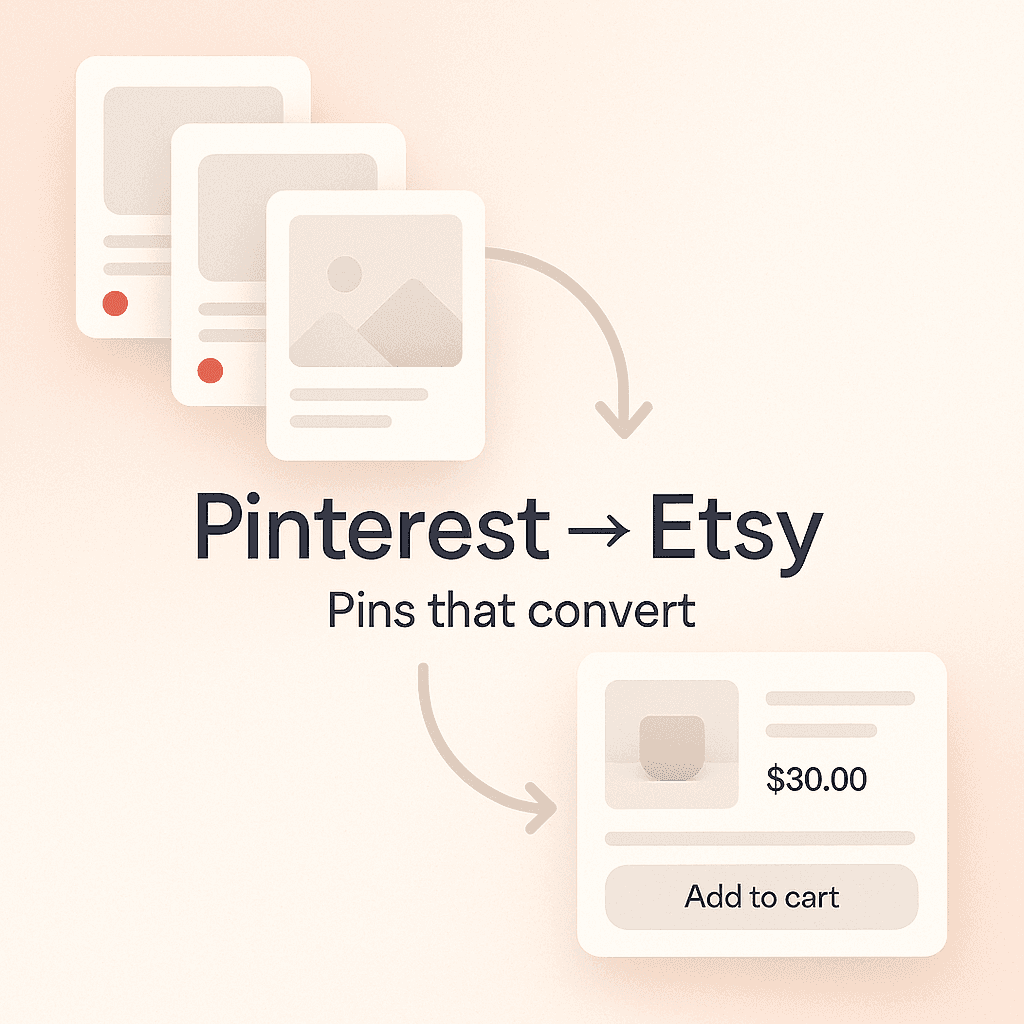
Search or feed impression → Pin that pre-sells → Etsy listing that matches the promise → Purchase (or favorite) → Retarget with more pins
If any part breaks, you get “tons of clicks, no sales” or “no clicks at all”.
A pin that converts is basically a tiny sales page
A converting pin usually does three things in one glance:
- Names the product
- Names the use case
- Signals style or outcome
Not “Cute shirt”. More like:
“Funny Teacher Shirt for Last Day of School”
“Minimalist Botanical Printable Wall Art Set”
“Matching Family Reunion Shirts (Custom Name + Year)”
Pinterest is visual, sure. But it’s also literal. People type exactly what they want. Reward that behavior.
The biggest conversion killer: mismatch between pin and listing
This is the silent problem.
You make a pin that says “Neutral Boho Wall Art Set”. They click. Then the Etsy listing thumbnail is a dark moody mockup, the title starts with your shop name, and the first photo doesn’t even show the set.
They bounce.
So before we even get into design tricks, you need message match.
Pin promise = Listing reality.
Same keywords. Same vibe. Same product angle. Same audience.
If you only take one thing from this article, take that.
What to pin (if you sell POD on Etsy)
You don’t need to pin everything. Pin what Pinterest users already buy from Etsy.
These categories usually convert well:
- Shirts for specific roles (teacher, nurse, mom, bride, etc)
- Seasonal and event-based designs (graduation, Halloween, new baby, etc)
- Personalized items (names, dates, teams, cities)
- Home decor visuals (posters, canvas, pillows)
- Giftable niches (new homeowners, book lovers, pet people)
And here’s the extra detail most people skip.
Pinterest loves outcomes and scenarios. Etsy loves specifics and keywords. Your pin has to be both.
So instead of “Funny Dog Shirt”, you go:
- “Funny Dog Mom Shirt for Golden Retriever Lovers”
- “Cute Rescue Dog Shirt Gift Idea”
- “Dog Mom Shirt Outfit for Fall”
Those are pins that can grab a search query and still feel like a real product.
The pin formats that actually work (and why)
You can post one beautiful product photo and call it a day. Sometimes it works.
But if you’re aiming for consistent conversions, these formats tend to pull ahead.
1. The “Product + Use Case” pin
One clean hero image with text overlay:
- “First Day of School Teacher Shirt”
- “Camping Sweatshirt Outfit Idea”
- “Bridesmaid Getting Ready Shirts”
It works because it answers “what is it” and “when would I wear/use it” instantly.
Image suggestion:
2. The “Carousel story” pin (Idea pin or standard multi image)
Show:
- The product in context (mockup)
- Close up detail (fabric, print, personalization)
- Variations (colors, styles)
- Gift angle (who it’s for)
People don’t always click on the first impression. They click once they feel safe. This is where Pinterest carousel pins come in handy as they allow for multiple images to be showcased in a single post.
3. The “Comparison” pin
This is underrated.
- “Comfort Colors vs Bella Canvas: which looks more vintage?”
- “Minimalist vs Maximalist gallery wall set”
- “Black hoodie vs sand hoodie (same design)”
It creates engagement, saves, and clicks from people trying to decide.
4. The “Bundle” pin
Pinterest users love sets. Etsy buyers love feeling like they got more value.
Instead of pinning one shirt, pin:
- “Matching Family Vacation Shirts Set”
- “3 Poster Set for Neutral Bedroom Wall”
- “Teacher Shirts Bundle for Back to School Week”
Even if your Etsy listing is one item, you can angle the pin as a “collection idea” and send to your best matching listing or a shop section.
The text overlay rule (so it doesn’t look spammy)
Text overlay is important, but it can go wrong fast.
Here’s the rule I use:
Big keyword phrase + small clarifier. That’s it.
Examples:
- Funny Nurse Shirt
Gift idea + multiple colors - Printable Nursery Wall Art
Instant download, neutral set - Custom Family Reunion Shirts
Add name + year
Don’t write paragraphs on the pin. Pinterest users scroll fast. Make it readable on a phone.
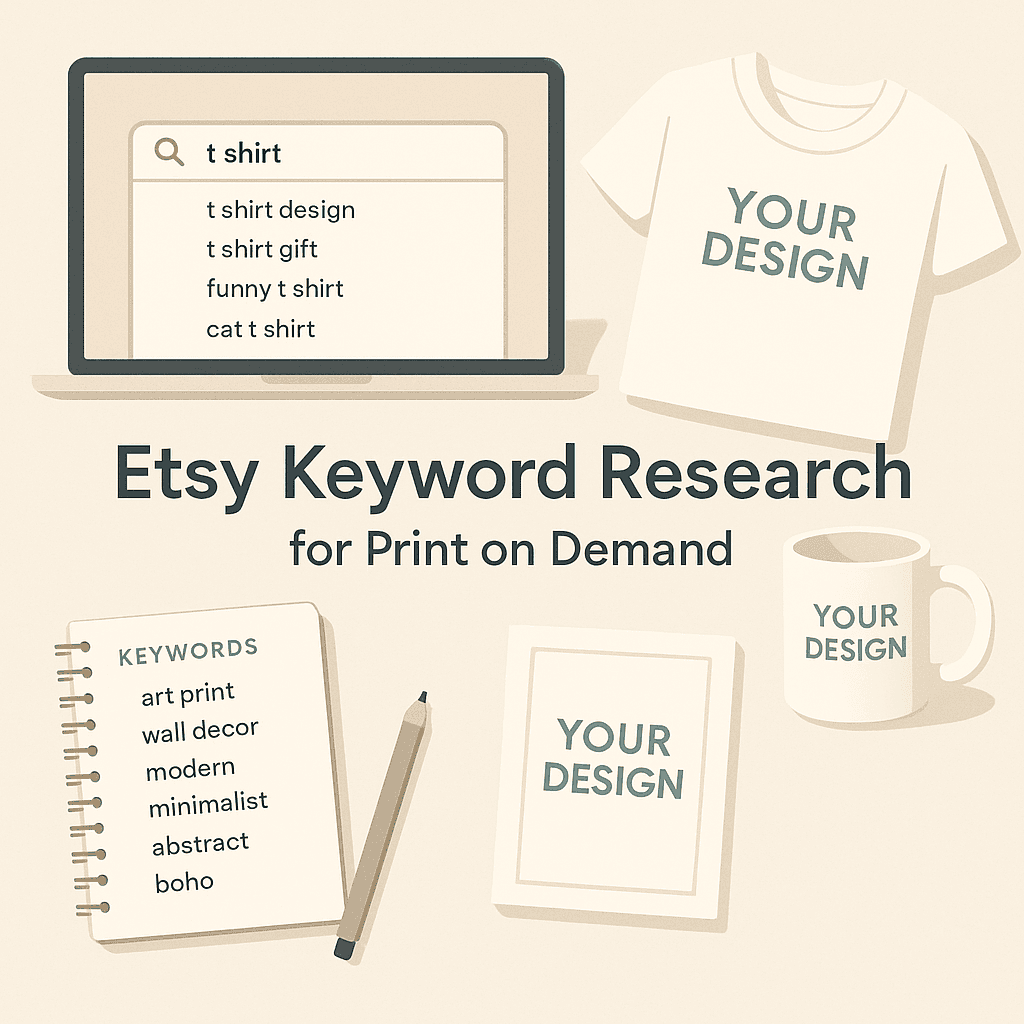
Keywords: Pinterest SEO meets Etsy SEO
Pinterest is basically a visual search engine. Etsy is also a search engine.
So you want the keywords to line up.
Pinterest keywords come from:
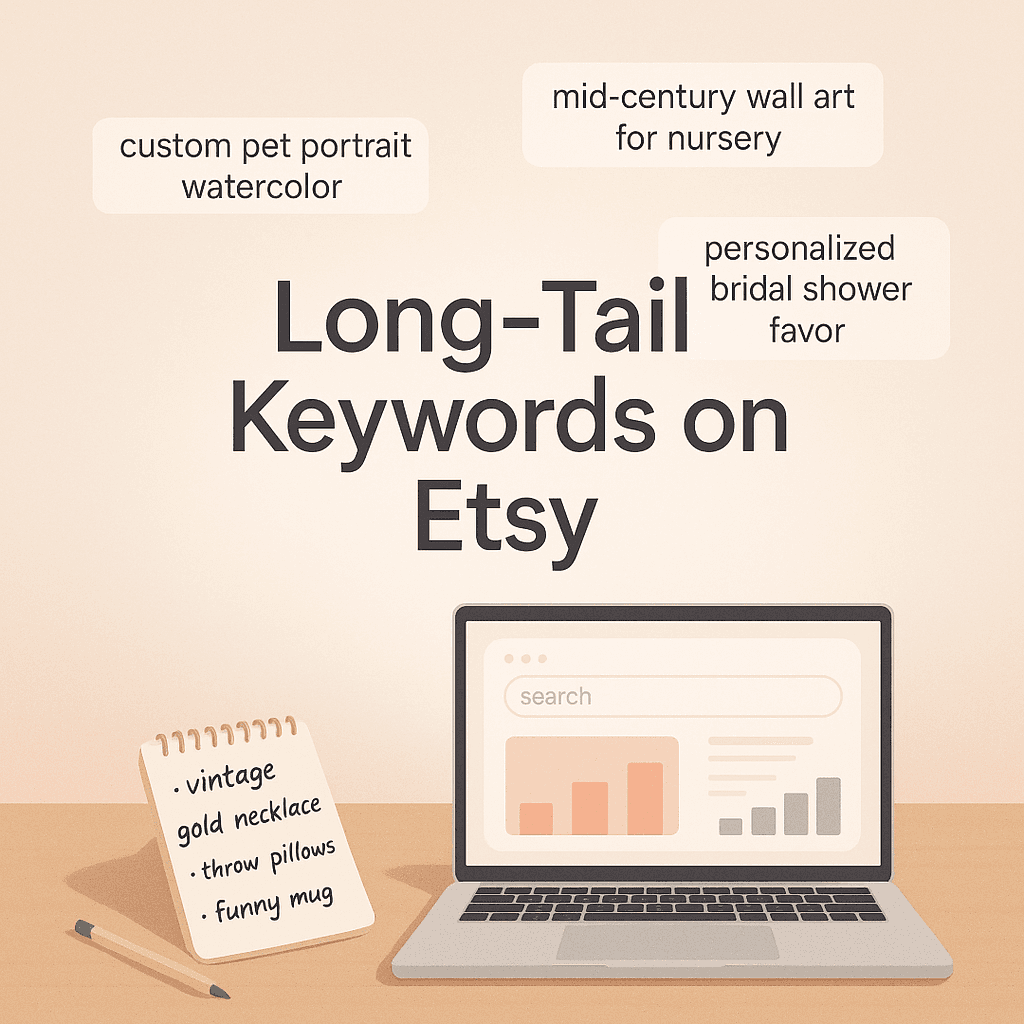
- Pinterest search bar autosuggest
- The “guided” keyword bubbles that appear after a search
- Competitor pin titles that keep showing up
- Trends (seasonal spikes)
Etsy keywords come from:
- Etsy search autosuggest
- Top listing titles in your niche
- Tags used by bestsellers (you can reverse engineer a lot)
- Actual trend shifts (styles change fast)
When you align the two, you get pins that bring in the right click. Not just any click.
A practical example:
Pinterest search: “teacher shirt back to school”
Etsy converts better on: “back to school teacher shirt”, “first day teacher outfit”, “teacher tee comfort colors”
So your pin title might be:
Back to School Teacher Shirt (First Day Outfit Idea)
And your Etsy listing needs to reflect that same phrasing in the title and tags.
Your Etsy listing has to close the sale fast
Pinterest users are not patient researchers. They click, scan, decide.
So your Etsy listing needs:
- A first photo that matches the pin
- Mockups that show scale and vibe quickly
- Clear personalization steps (if relevant)
- A title that doesn’t bury the lead
- A description that answers the top 5 questions without fluff
If you’re doing POD, this is where automation helps a lot, because you’ll be doing volume.
This is honestly where something like NinjaSell fits naturally. If you’re uploading designs and building Etsy drafts, having a system generate optimized titles, tags, and descriptions based on actual Etsy trend and bestseller data saves a ton of time. Same with Etsy style mockups and pushing drafts straight to Etsy.
And if you’re the kind of seller who wants Pinterest traffic ongoing, not just “launch week”, NinjaSell’s built in Pinterest auto posting and listing refresh features can keep older products from dying quietly in the corner.
Subtle plug, but yeah. That’s the kind of workflow that makes Pinterest worth it long term.
Pin design: what “looks like it belongs on Pinterest”
Pinterest has an aesthetic, but it’s not one aesthetic. It’s more like: “clean, helpful, aspirational, not cluttered.”
Quick design checklist
- Vertical 2:3 ratio (1000 x 1500 is the common go-to)
- One focal point (product mockup, room scene, outfit shot)
- High contrast text if you use overlay
- A little breathing room
- Avoid tiny fonts, avoid overdecorating
If you sell shirts, your best converting pins often look like outfit pins. Not product catalog pins.
If you sell wall art, your best converting pins look like room inspiration. Not just the art file floating on white.
For further insights into creating effective Pinterest pins for your Etsy listings, consider watching this informative video which provides valuable tips and strategies to enhance your pin design.
Image suggestion:

The “click magnet” angle: make the pin solve a tiny problem
Some pins get clicks because they’re pretty.
Converting pins usually get clicks because they answer something specific.
Try framing pins like:
- Outfit idea
- Gift idea
- Theme idea
- Decor idea
- Party idea
- Matching set idea
Examples that tend to convert well:
- “What to Wear: First Day of School Teacher Outfit”
- “Gift for New Homeowners (Funny Doormat Idea)”
- “Neutral Bedroom Wall Decor Set (Printable)”
- “Matching Disney Trip Shirts (Family Set)”
You’re basically meeting Pinterest where it lives. It’s planning brain.
How many pins per product (without spamming)
For Etsy + POD, a good target is 3 to 8 pins per product, spread out over time.
Use a different angle for each pin:
- Occasion
- Recipient
- Style
- Colorway
- Close up detail
- Bundle idea
You don’t need 50 pins for one listing. You need a few good ones that hit different searches.
Boards matter, but not the way people think
Boards are not dead. They’re just not magic.
Create boards that are specific enough to rank and broad enough to grow.
Good board names:
- “Teacher Shirt Ideas”
- “Fall Outfit Ideas for Moms”
- “Neutral Nursery Decor”
- “Funny Dog Mom Gifts”
- “Family Reunion Ideas”
Bad board names:
- “My Products”
- “Cute Stuff”
- “Shop”
And yes, use keywords in board descriptions. Just write like a person. Not like you’re stuffing tags in 2009.
Posting cadence: consistency beats intensity
If you can post daily, great.
If you can’t, don’t do the “post 100 pins on Sunday and disappear” thing.
Try:
- 3 to 10 pins per day if you’re scaling
- 3 to 5 pins a week if you’re starting
The key is steady signals. Pinterest learns what you are about.
Also, new accounts sometimes take time to “warm up”. Don’t panic in week one.
Make the funnel tighter with one simple trick: send pins to the best listing, not the exact listing
This is controversial, but it works.
If you have 10 similar designs, don’t send every pin to a weak listing just because it matches perfectly.
Send Pinterest traffic to the listing that converts best, as long as the promise still matches.
If your “funny teacher shirt” design is similar across listings, pick the one with:
- Best photos
- Best reviews
- Best shipping promise
- Strongest conversion history
Pinterest is not your catalog. It’s your front door.
Tracking what converts (without overcomplicating it)
You don’t need a fancy dashboard to start.
Track:
- Pin link clicks
- Saves
- Etsy visits from Pinterest
- Etsy orders attributed to Pinterest (in Etsy stats)
When a pin gets clicks but no sales, usually it’s one of these:
- The pin is attracting the wrong keyword intent
- The listing photos are weak
- Price is out of range for that audience
- Shipping time scares people off
- The product is fine but the mockup looks unrealistic
When a pin gets saves but no clicks, it’s usually:
- Too “idea based” with no product clarity
- Text overlay doesn’t say what it is
- The image is pretty but vague
The fastest way to improve: rebuild your winners, don’t guess new ones
When you find a pin that converts, don’t just celebrate and move on.
Clone it.
- Same layout, new product
- Same angle, new niche
- Same keyword pattern, different season
Pinterest rewards patterns. Your job is to create a repeatable template you can scale.
A realistic mini blueprint you can copy this week
If you want a simple, not overwhelming plan, do this:
Day 1: Pick 5 products that already sell on Etsy
Not your favorites. The ones with proof.
Day 2: Create 4 pins for each product (20 total)
Angles:
- Gift idea
- Occasion
- Style descriptor
- Bundle/collection
Day 3: Build 5 keyword boards
Match the niches.
Day 4 onward: Post 2 to 5 pins daily
Mix new pins with a few repins of your own stuff.
And if you’re running POD and you’re trying to scale listings fast without turning it into a full time admin job, look at a workflow tool like NinjaSell. Especially since it’s built around Etsy listing SEO, mockups, one click draft publishing, and it’s designed for the “I want more products live without losing my mind” phase.
Final thought (because this is the part nobody wants to hear)
Pinterest isn’t hard. It’s just honest.
If the pin promise is clear, the keyword intent is right, and the Etsy listing closes cleanly, you’ll get sales. Maybe not instantly, but steadily.
If any of those pieces are fuzzy, Pinterest will still send traffic sometimes. But it’ll feel like empty calories.
Build the funnel. Make the pin do a job. Then let Pinterest do what it does best.
Slow, steady, and surprisingly effective when you stop treating it like social media.
FAQs (Frequently Asked Questions)
Why is Pinterest traffic described as ‘weird’ compared to Instagram?
Pinterest traffic behaves differently because it’s like planting SEO seeds that may take weeks to grow. Unlike Instagram’s quick spikes, some pins lie dormant before suddenly generating sales, often unpredictably and at odd hours like 2am.
What is the essential funnel for converting Pinterest clicks into Etsy sales?
The simple funnel involves catching users in one of three modes—browsing, saving for later, or ready to buy—and guiding them from search or feed impression → a pin that pre-sells → an Etsy listing that matches the promise → purchase or favorite → retarget with more pins. Each step must align perfectly to avoid losing clicks or sales.
How should a converting Pinterest pin be designed?
A converting pin acts like a tiny sales page by naming the product, specifying its use case, and signaling style or outcome at a glance. For example, instead of ‘Cute shirt,’ use ‘Funny Teacher Shirt for Last Day of School’ to match what users are searching for literally and visually.
What is the biggest conversion killer between Pinterest pins and Etsy listings?
The biggest issue is message mismatch—when the pin promises something different than what the Etsy listing delivers. This includes differences in keywords, style, product angle, or audience. Ensuring ‘Pin promise = Listing reality’ with consistent keywords and vibe is critical for conversions.
What types of products should POD sellers pin on Pinterest to maximize conversions?
Focus on categories Pinterest users already buy from Etsy such as shirts for specific roles (teacher, nurse), seasonal/event designs (graduation, Halloween), personalized items (names, dates), home decor visuals (posters, pillows), and giftable niches (pet lovers). Pins should highlight outcomes and scenarios with specific keywords.
Which Pinterest pin formats tend to drive consistent conversions for Etsy sellers?
Effective formats include: 1) Product + Use Case pins with clear text overlays answering what it is and when to use it; 2) Carousel story pins showing product context, details, variations, and gift angles; 3) Comparison pins highlighting differences between options; and 4) Bundle pins presenting sets or collections that appeal to value-conscious buyers.