There’s this weird window in print on demand where a niche is still small enough to be friendly, and still big enough to pay you. And if you land in that window early, you can build something that feels unfair later.
Not unfair like a hack. More like… you did the homework when it was quiet.
Because once a niche gets loud, everyone sees the same Pinterest boards, the same Etsy bestsellers, the same keyword lists. Suddenly you’re not competing on creativity. You’re competing on who can upload 50 listings a day, or who can discount harder. That’s not a moat. That’s a treadmill.
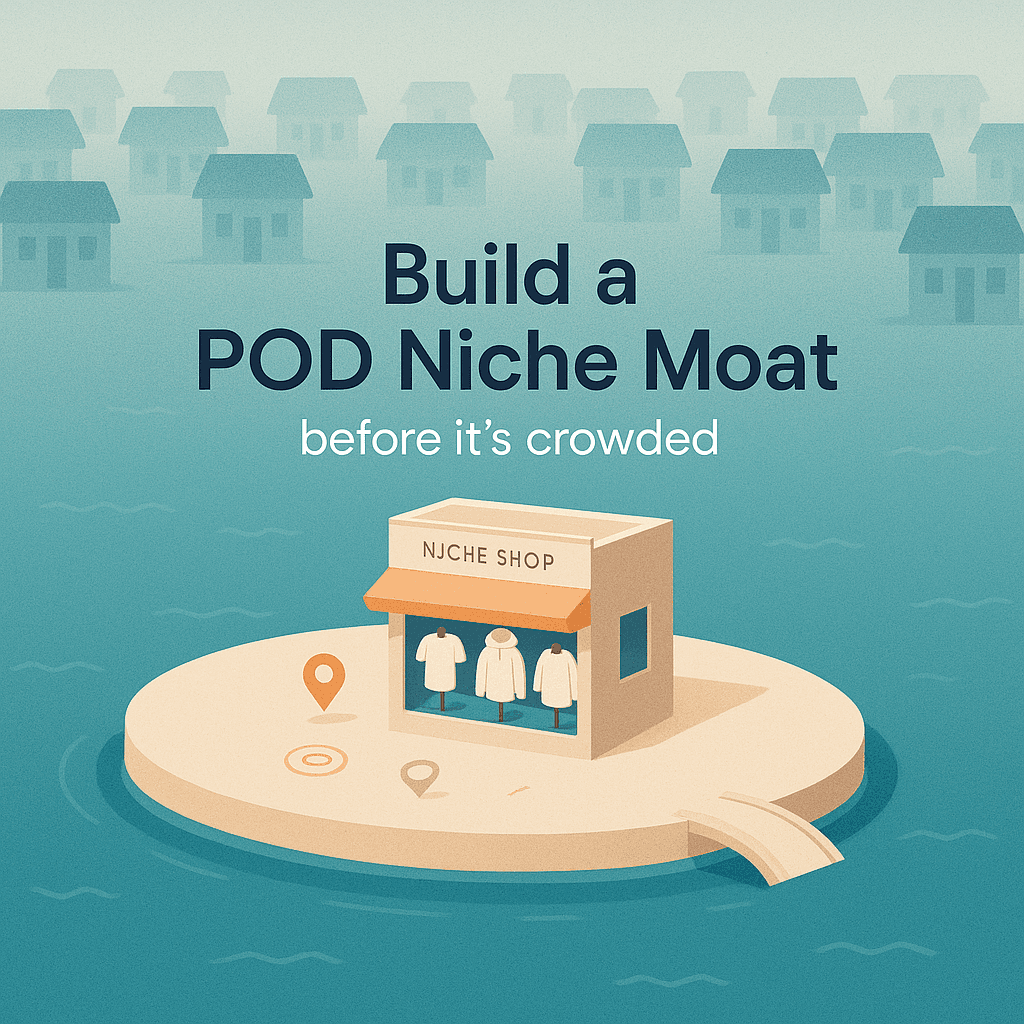
So let’s talk about building a niche moat in POD. Before it’s crowded. While you can still plant a flag.
And yeah, I’m going to keep it practical. The goal is not “find a niche.” The goal is: own a slice of a niche in a way that’s hard to copy.
First, what a niche moat actually is (in POD terms)
A niche moat is the reason a buyer picks your shop even when ten other sellers are doing the same theme.
It’s not your product type. “I sell shirts.” No one cares.
It’s usually one or more of these:
- A specific micro audience that feels seen by your designs
- A recognizable style that makes your listings look like they come from one brand
- A repeatable angle (a format) you can expand forever
- A keyword footprint on Etsy that you got early and reinforced over time
- Trust signals: reviews, consistency, fast fulfillment, clean mockups, fewer mistakes
- Actual research habits that keep you ahead, not chasing
Most people try to build moats with volume. Upload more. Try more. Spray and pray.
But if you’re early in a niche, you can build a moat with precision.
Step 1: Stop thinking “niche.” Start thinking “tribe + moment + product”
A niche that’s too broad crowds instantly.
“Dog shirts.” “Teacher gifts.” “Mental health tees.” Those are basically cities. Full of traffic, full of competition, and you’re renting a room.
Instead, look for this combination:
1) Tribe
A group with identity. Not just interest.
Examples:
- Speech language pathologists (not “teachers”)
- NICU nurses (not “nurses”)
- RV retirees (not “camping”)
- New dads who are obsessed with their first baby (not “dad jokes”)
2) Moment
When are they buying?
Examples:
- Graduation season
- New job
- Baby announcement
- Competition season
- Holidays but like, their holidays (band competitions, state meets, conference season)
3) Product context
What do they actually buy in POD?
Sometimes it’s shirts. Sometimes it’s mugs. Sometimes it’s sweatshirts because the niche lives in cold gyms or hospitals or early mornings. Sometimes it’s stickers because it’s an identity thing and they want it on laptops.
When you align tribe + moment + product, you get something like:
- “Newly hired NICU nurse sweatshirt for first week orientation”
- “Speech therapist tote bag end of school year gift”
- “RV couple Christmas ornament 2026”
That’s where moats start. It’s harder to copy because it’s specific, and it’s tied to buying intent.
Step 2: Find the “format” inside the niche (this is the part people skip)
Formats are moats.
A format is a template idea you can run 50 times without repeating yourself. It’s the thing that becomes recognizable and scalable.
Some format examples that work ridiculously well on Etsy:
- Name personalization: “Sarah’s [role] era”
- Year stamping: “Est. 2026” for new chapters
- Checklist / traits: “Tired, caffeinated, saving lives”
- Inside jokes: jargon only the tribe understands
- Map / coordinates: hometown, travel, events
- Badge style: “Official member of…” “Certified…” “Licensed…” vibes
- Stacked typography that matches the niche aesthetic
The point is: if your niche is “pickleball moms,” the moat isn’t “pickleball shirt.” It’s “pickleball mom shirt in my recognizable retro badge format, with seasonal variations, with inside jokes, with consistent colors, with matching mockups.”
That’s brand. That’s a footprint.
Here’s a quick mental test: If a competitor sees one of your bestsellers, can they clone it in 10 minutes?
If yes, you don’t have a moat. Yet.
Step 3: Build a micro catalog, not random listings
Early niche strategy is not about listing 200 items. It’s about making Etsy see you as relevant for that micro topic.
I like to think in clusters.
The 15 listing cluster method
Pick one micro niche angle and build 15 listings that sit next to each other like a family.
They should share:
- Visual style
- Keyword ecosystem
- Product type (mostly)
- Same buyer mindset
Example cluster for “newly hired nurse”:
- “New Grad RN 2026”
- “First Day as an RN”
- “I Can’t I Have Clinicals”
- “Fueled by coffee and compassion”
- “Nurse era” personalization
- “Nurse life” but in your exact format
- 2 to 3 gift targeted listings: “Gift for new nurse” etc
Why this works: Etsy doesn’t just rank listings, it builds associations. When a shopper clicks one listing, you want your shop to look like the obvious next click.
And for you, it’s easier to maintain consistency. Which is… honestly rare.
Step 4: Lock in keyword real estate early (without being spammy)
If you wait until a niche is crowded, you end up fighting over the same 2 to 3 head keywords.
“NICU nurse shirt” “Speech therapist gift” “Pickleball sweatshirt”
At that point, it’s a bloodbath.
The early niche moat move is to target long tail keywords that are still “obvious” to buyers, but not yet saturated by sellers.
Examples:
- “new nicu nurse gift”
- “nicu nurse orientation sweatshirt”
- “speech therapist tote bag funny”
- “first year slp gift”
- “pickleball mom retro comfort colors”
You’re basically buying cheap land.
And this is where automation can help without turning you into a robot. Tools like NinjaSell (built for Etsy POD sellers) can generate Etsy style titles, tags, and descriptions based on Etsy bestseller and trend data, so you’re not guessing keywords from vibes. You still choose the niche. But you’re not stuck writing 13 tags at 1 a.m.
Also, NinjaSell includes trademark checks against USPTO data, which is not a moat exactly, but it prevents you from stepping on landmines while you’re building.
Step 5: Use “style consistency” as your moat (because it compounds)
This one is boring. And it works.
If your shop looks like:
- 10 different font styles
- 6 different mockup types
- random color palettes
- random title formats
You don’t look like a brand. You look like a warehouse.
In crowded niches, the brand feel is what makes someone pause.
So pick a simple style system:
- 2 font pairings max
- 1 to 2 design layouts (badge, stacked, script + block, etc.)
- 8 to 12 colors that you reuse
- a consistent mockup vibe (bright, neutral, lifestyle, etc.)
- consistent product types (don’t sell 40 mugs and 2 shirts and 1 hat in the same niche unless it’s intentional)
When you do this, customers start to recognize you even if they don’t know they recognize you.
That’s a moat. Recognition is expensive to buy. You can earn it early.
However, it’s worth noting that relying solely on traditional strategies might not always yield the desired results. In fact, sometimes AI keeps recommending my competitors but not us. This highlights the importance of staying ahead of the curve and adapting to new technologies and methodologies in order to maintain a competitive edge in the ever-evolving e-commerce landscape.
Step 6: Don’t chase trends. Build “trend adapters”
Trends are tricky in POD because by the time you see the trend, it’s already in 500 shops.
So the better play is to create a niche system that can absorb trends.
I call these trend adapters:
- “In my [role] era”
- “It’s a [thing] thing”
- “Not today” formats
- “Coquette” styling, “retro” styling, “minimal” styling as overlays
Your niche stays stable, but your presentation can flex.
So instead of pivoting from “speech therapist gifts” to “cowgirl aesthetic” because TikTok said so… you make a speech therapist design that uses the cowgirl aesthetic, if it fits.
You’re not abandoning your niche. You’re decorating it.
That’s how you stay early. Over and over.
Step 7: Build moats with buyers, not just products
Here’s the part that feels slow but pays.
Add personalization where it makes sense
Personalization increases conversion and reduces direct competition. Even basic personalization.
Examples:
- name
- year
- role title
- location
- team name (careful with trademarks, always)
Personalization also creates review language that’s unique. People mention their name, their event, their story. That becomes social proof you can’t copy.
Build “gift intent” listings
A lot of Etsy traffic is gifting.
So you don’t just sell “NICU nurse shirt.” You sell:
- “Gift for NICU nurse”
- “NICU nurse appreciation”
- “New NICU nurse gift”
- “NICU nurse week” (seasonal moment)
Same design sometimes. Different buyer brain.
Step 8: Make your listing assets a moat (mockups, photos, clarity)
Most POD sellers lose here because they rush.
A clean listing is a conversion moat.
Checklist:
- mockups that match the niche vibe (nurses do not need beach mockups)
- readable thumbnails
- one close up showing print texture
- sizing chart that doesn’t look like it came from 2014
- consistent backgrounds
If you use a platform that generates Etsy style mockups for your products, great. Less friction. Just make sure you’re still curating. Automation should make you faster, not sloppy.
NinjaSell does mockups and one click publish to Etsy as drafts, which is honestly the best workflow. Drafts let you review before pushing live. That’s how you keep quality while moving quickly.
Step 9: Refresh, don’t reinvent (this is where the moat compounds)
Once you have 15 to 30 listings in a niche, your job becomes:
- protect the winners
- revive the ones that should be winning but aren’t
- expand sideways into adjacent micro angles
A lot of sellers panic when a listing slows down and they delete it or abandon the niche.
But on Etsy, a listing with history is an asset. Even if it’s underperforming right now.
So instead of rewriting everything manually, use a system.
NinjaSell has a feature called ReSpark that refreshes underperforming listings with updated trend based keywords. That’s basically niche maintenance. Which is the unsexy work most people avoid, and it’s exactly why it becomes a moat.
Because when the niche gets crowded, the sellers who survive aren’t the ones uploading random new stuff. They’re the ones maintaining their keyword real estate and keeping their catalog relevant.
Step 10: Expand with “adjacent niches” that share the same buyer
This is where you turn a niche into a small empire, without losing focus.
Adjacent niches are like cousins. Similar vocabulary, similar aesthetics, similar product choices.
NICU nurse niche can expand to:
- pediatric nurse
- labor and delivery
- respiratory therapist
- nurse preceptor gifts
Pickleball niche can expand to:
- tennis moms
- golf wives
- country club humor
- retirement humor (overlap is real)
You keep your format and brand style, and you branch out.
That’s how you build a moat that isn’t fragile.
A quick visual: what “moat building” looks like in practice
Here are a few simple diagrams and checklists you can literally screenshot.
1) Niche Moat Triangle
2) The 15 Listing Cluster Plan
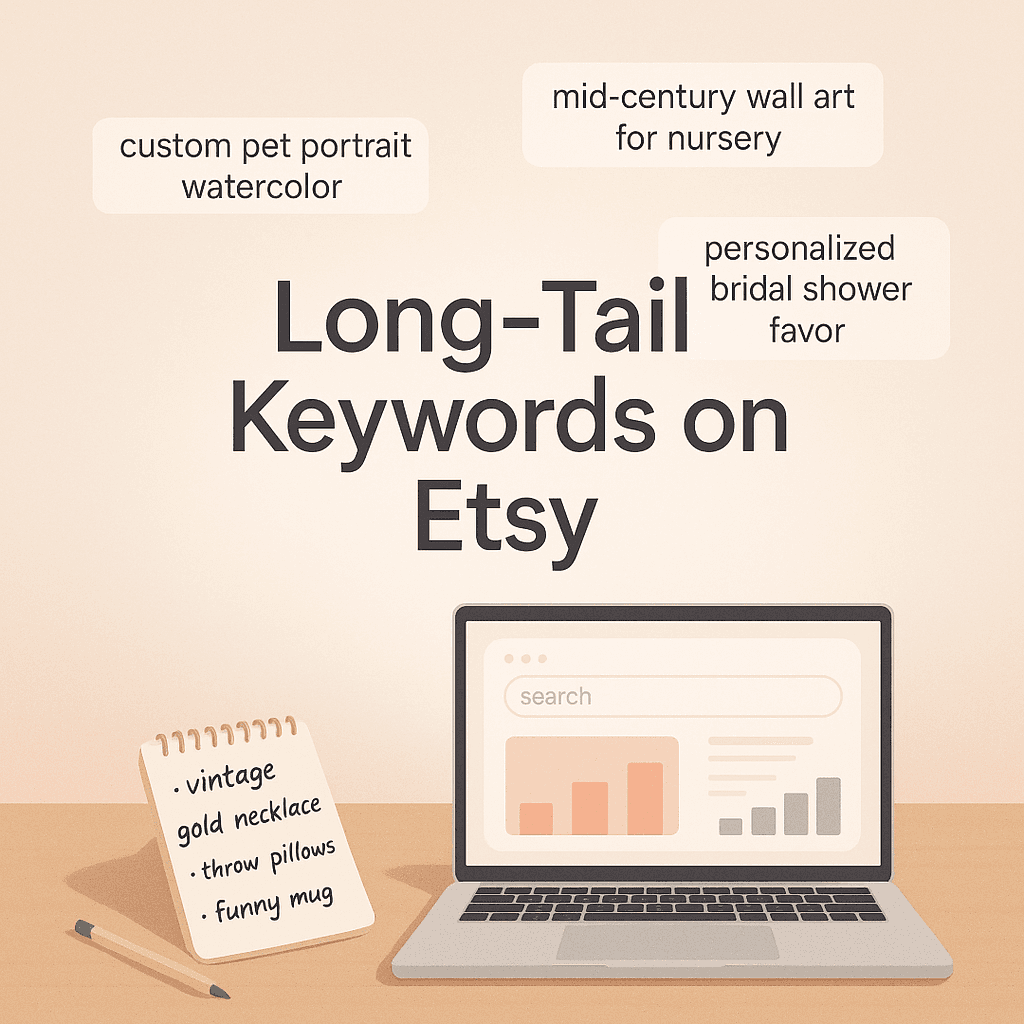
3) Long tail keyword examples list
(If you don’t want to design these images, you can also replace them with screenshots of your own niche research notes, or a blurred Etsy search results page showing long tails. Anything that makes it feel real.)
The “before it’s crowded” checklist (print this mentally)
If you want a niche moat, and you want it early, do this:
- Pick a tribe with identity, not a broad interest
- Choose one format you can expand for months
- Build a 15 listing cluster with consistent style
- Target long tail keywords and get indexed early
- Add gift intent versions of your best designs
- Use personalization where it fits naturally
- Keep mockups consistent and niche aligned
- Refresh listings instead of abandoning them
- Expand to adjacent niches only after you win the first slice
That’s it. Not glamorous.
But it’s how you end up with a shop that looks “established” while everyone else is still throwing spaghetti.
Where NinjaSell fits (subtle, but real)
If you’re trying to build a moat, the bottleneck is usually not creativity. It’s execution.
It’s:
- writing SEO titles and tags that don’t sound broken
- making mockups that look like Etsy, not like a supplier catalog
- publishing consistently without making mistakes
- checking trademarks so you don’t nuke your shop
- keeping older listings updated as buyer language shifts
That’s basically what NinjaSell is built for. It’s an all in one POD automation platform for Etsy sellers. You upload designs, it helps turn them into Etsy ready products with optimized listings, mockups, trademark checks, and one click publishing to Etsy as drafts. Plus tools like ReSpark for refreshing underperformers, and auto posting to Pinterest for ongoing traffic.
If you want to check it out, start here: https://ninjasell.com
Wrap up (the honest part)
Most POD sellers enter niches when they’re already crowded. Then they wonder why nothing sticks.
Building a niche moat is just choosing to be early. Or at least choosing to act like you’re early. Tight focus, consistent execution, and a catalog that feels like a brand, not a garage sale.
And if you do it right, the niche can get crowded later. It won’t matter as much.
Because you were there first. And you built something that’s hard to copy.
FAQs (Frequently Asked Questions)
What is a niche moat in print on demand (POD) and why is it important?
A niche moat in POD is the unique reason a buyer chooses your shop over others selling similar themes. It goes beyond just product type and includes factors like targeting a specific micro audience, having a recognizable style, repeatable design formats, strong keyword presence on platforms like Etsy, trust signals such as reviews and consistency, and research habits that keep you ahead of competition. Building a niche moat early allows you to own a slice of the market that’s hard to copy, giving you a competitive edge before the niche becomes crowded.
How can I identify a profitable niche moat rather than just finding any niche?
Instead of broadly searching for a niche, focus on owning a slice of a niche by combining three elements: tribe (a group with identity, not just interest), moment (specific buying occasions), and product context (the actual POD products they buy). For example, targeting ‘newly hired NICU nurse sweatshirts for first week orientation’ is more precise and defensible than just ‘nurse shirts.’ This specificity ties directly to buying intent and creates a moat that’s harder for competitors to replicate.
What are some effective design formats that create moats within a POD niche?
Design formats are scalable templates that become recognizable and difficult to copy. Effective formats include name personalization (e.g., ‘Sarah’s [role] era’), year stamping (‘Est. 2026’), checklist or traits designs (‘Tired, caffeinated, saving lives’), inside jokes or jargon only the tribe understands, map or coordinates related to hometowns or events, badge styles (‘Official member of…’), and stacked typography matching the niche aesthetic. These formats build brand identity and customer loyalty within your micro-niche.
Why is focusing on volume alone not an effective strategy for building a POD business in a niche?
Competing solely on volume by uploading many listings or discounting heavily turns into a treadmill with no real competitive advantage. When niches get crowded, everyone uses the same trends and keywords, making creativity less relevant. Instead, building precision-based moats with specific tribes, moments, and products creates sustainable differentiation that volume alone cannot achieve.
How should I structure my product listings early in my POD niche strategy?
Early on, focus on creating micro-catalogs or clusters rather than random listings. Use methods like the ’15 listing cluster’ where you build 15 listings around one micro-niche angle that share visual style, keyword ecosystem, product type, and buyer mindset. This helps Etsy recognize your shop as relevant for that specific topic and strengthens your position in the niche.
What role do trust signals play in establishing a successful POD shop within a niche?
Trust signals such as positive reviews, consistent branding and fulfillment speed, clean mockups, and minimal mistakes contribute significantly to your niche moat. They build buyer confidence which encourages repeat purchases and word-of-mouth referrals. In competitive niches where many sellers offer similar products, these trust factors help differentiate your shop as reliable and professional.