There’s a weird trap POD sellers fall into, especially on Etsy.
You see a trend pop off. A color palette. A vibe. Maybe a type style. You think, “Cool, I’ll do my version.”
Then you spend the whole night designing. You mock it up. You publish it. And it just… sits. Views trickle in. A couple favorites. No sales.
And it’s confusing because the design is good. Like actually good.
But the problem usually isn’t the design. It’s the reason people are buying in that moment: buyer intent.
Design trends are what people notice.
Buyer intent is what people pay for.
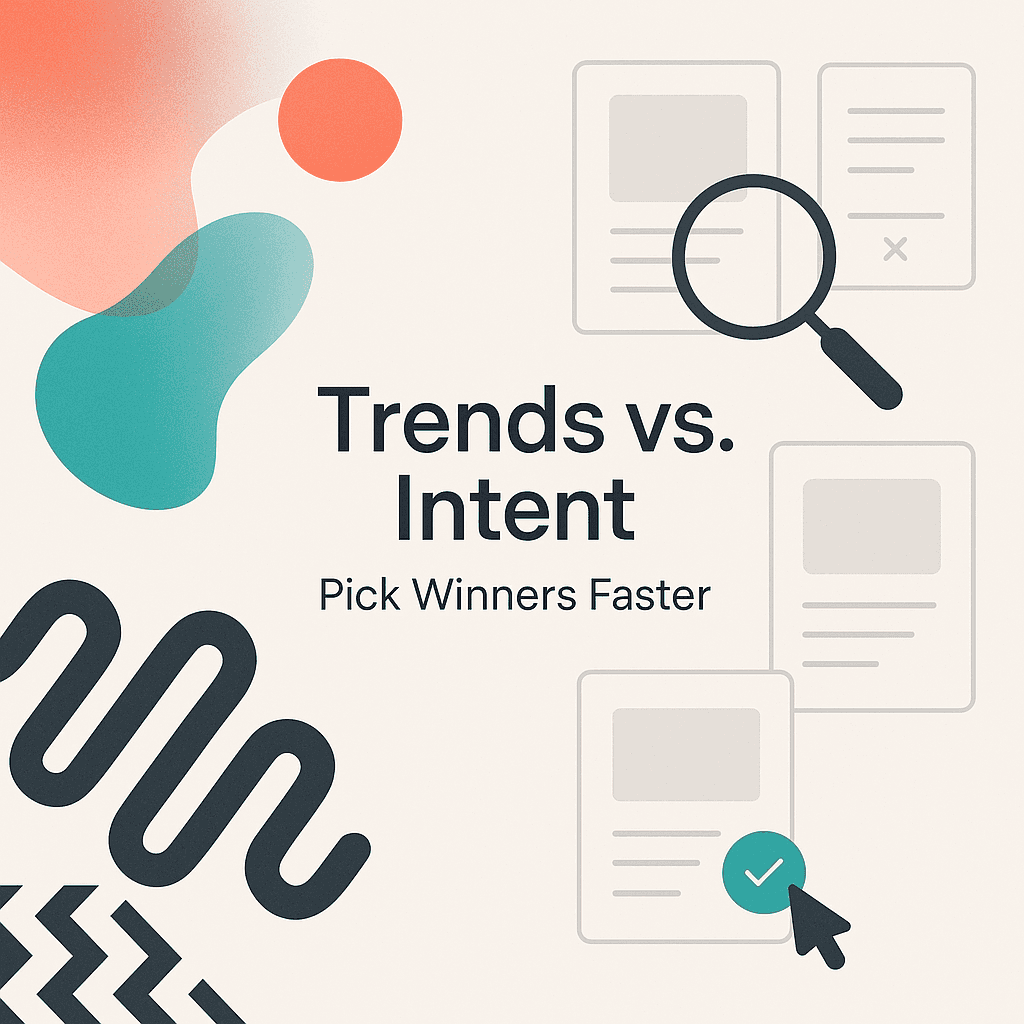
This post is about separating those two quickly so you can pick winners faster, without guessing, without burning a week on designs that were never going to sell.
Design trends are the “what”. Buyer intent is the “why”.
A design trend is surface level.
Think:
- Coquette bows, soft pink, cursive script
- Retro groovy type
- Minimal line art
- Cottagecore mushrooms
- Western boots and cowboy hats
- “Clean girl” neutrals
- Vaporwave gradients (yes, it comes back around)
Trends help your listing look current. They can increase click through rate. They can help you blend in with what’s already selling.
For instance, looking at the most popular experience design trends of 2026, you can see how these trends may affect buyer’s perception and engagement with your listings.
But intent is what makes a buyer type something into Etsy search and then pull out a card.
Intent looks like:
- “gift for new dad”
- “teacher appreciation shirt”
- “custom dog memorial”
- “bachelorette weekend”
- “matching family christmas pajamas”
- “pickleball team”
- “book club sweatshirt”
Notice the difference?
Trends are aesthetic. Intent is mission based.
And Etsy is a mission based marketplace. People show up with a job to do.
The fastest way to waste time in POD
Here’s the classic losing workflow:
- You browse Pinterest or TikTok
- You spot a style that looks hot
- You design something in that style
- You list it with vague tags like “cute shirt”, “aesthetic tee”, “trendy tshirt”
- You wonder why Etsy doesn’t send traffic
Because Etsy doesn’t know who it’s for. And the buyer doesn’t either, honestly.
A trend only becomes a product when it’s attached to an intent.
Coquette bows as a style is not a product.
“Coquette bridesmaid shirt” is a product.
“Coquette birthday girl” is a product.
“Coquette sorority big little” is a product.
Same style. Different intent. Now it sells.
A simple mental model: Trend = wrapper. Intent = engine.
If you remember nothing else, remember this:
- Trend is the wrapper that gets the click
- Intent is the engine that gets the sale
You can literally take one “engine” and swap wrappers.
Example: teacher appreciation
- Retro groovy teacher shirt
- Minimalist teacher shirt
- Coquette teacher shirt
- Western teacher shirt
Same buyer mission. Different taste.
That’s how you build a catalog that actually moves.
The “two question test” before you design anything
Before you open Canva, Illustrator, Procreate, whatever.
Ask:
1) What exact moment is this for?
Not “for women” or “for dog lovers”.
A moment.
- First day of school
- Pregnancy announcement
- New job
- Engagement
- Family vacation
- Sports tournament
- Wedding weekend
- Graduation
2) What would they type into Etsy to find it?
If you can’t say the search phrase out loud, it’s probably not ready.
Good:
- “pregnancy announcement shirt”
- “custom pet portrait sweatshirt”
- “funny retirement gift for dad”
- “matching bachelorette shirts”
- “teacher appreciation week gift”
Bad (too fuzzy):
- “cute aesthetic shirt”
- “trendy design”
- “minimal tee”
- “cool graphic”
Etsy runs on keywords. Buyer intent creates keywords.
Trend spotting is fine. You just have to translate it.
I’m not saying ignore trends. Trends are useful.
But you need to translate a trend into intent.
Here are a few examples of what that translation looks like.
Trend: “Coquette” bows, lace, pink
Intent angles that sell:
- birthday girl
- bridal party
- baby shower
- sorority
- Valentine gift
- “self care” gift bundles (yes, even on Etsy)
Trend: Retro groovy typography
Intent angles:
- teacher niches
- mama niches
- hiking/outdoors niches
- music festivals
- state pride
- “established 19xx” birthday shirts
Trend: Western / cowgirl
Intent angles:
- Nashville bachelorette
- rodeo season
- country concerts
- “mama tried” humor
- small town pride
The trend gives you the look. Intent gives you the buyer.
The four buyer intent buckets that print money (over and over)
Not always glamorous. But consistent.
1) Gift intent
People buying for someone else. Huge on Etsy.
Keywords usually include: gift, for him, for her, for mom, for dad, present, birthday, anniversary.
Designs that work:
- personalizable names/dates
- roles (dad, mom, aunt, grandma)
- inside jokes that are common enough to be searchable
2) Identity intent
People buy to signal who they are. This concept is deeply rooted in social identity, which suggests that our purchases often reflect our self-concept and social affiliations.
Keywords: mom life, dog mom, nurse, teacher, bookish, gamer, christian, latina, etc.
Careful here. Identity can get saturated fast. But it still sells if you go narrower.
3) Event intent
This is where POD gets silly profitable because deadlines force action.
Keywords: bachelorette, bridal shower, wedding, graduation, christmas, halloween, family reunion, vacation.
4) Hobby or community intent
Pickleball. Golf. Crocheting. Fishing. Hiking. D&D.
Keywords: gifts for, funny, club, team, matching, personalized.
If you’re stuck, pick one bucket and go deep for 30 days. Stop trying to do everything.
How to validate intent quickly without overthinking it
You don’t need a spreadsheet that looks like NASA built it.
You just need signals.
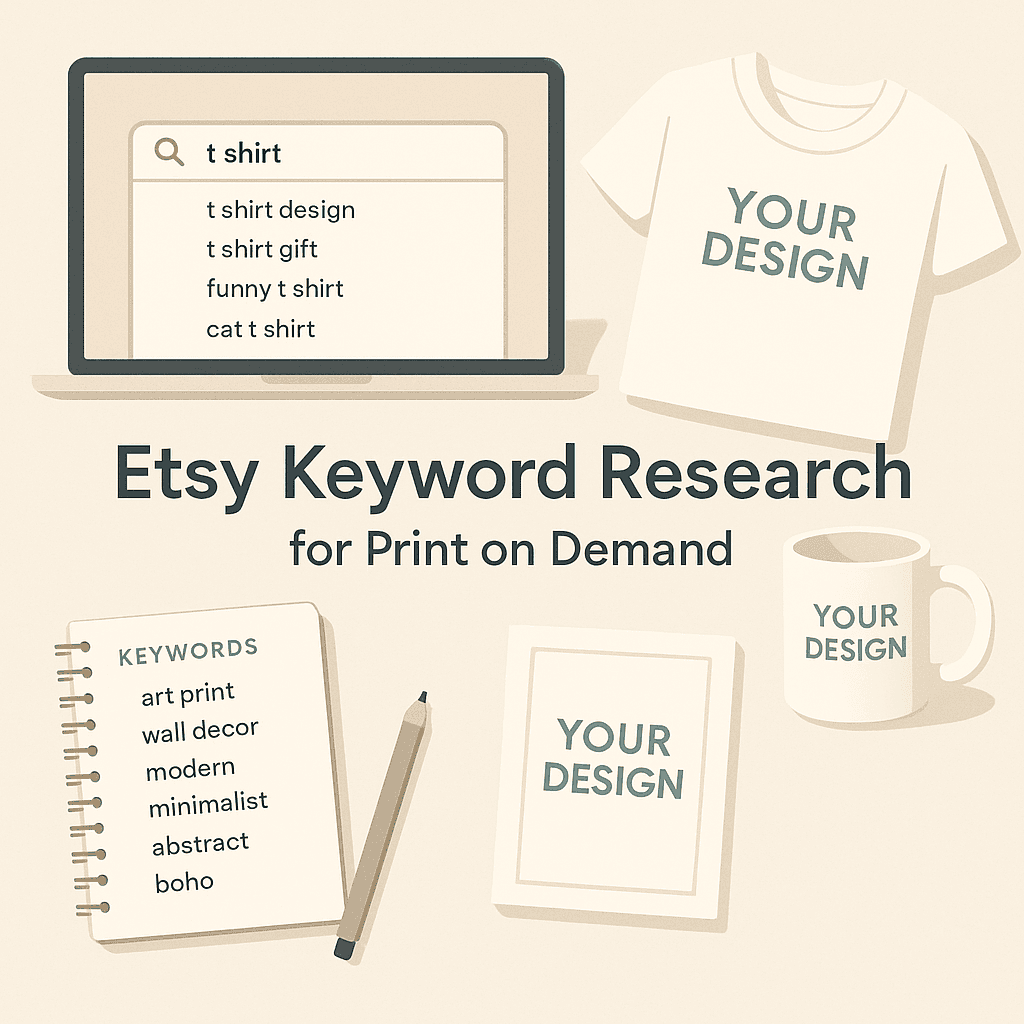
Signal 1: Etsy autocomplete
Start typing a phrase. Etsy will tell you what people are searching.
If “coquette shirt” expands into “coquette birthday shirt” or “coquette bridal” then you’ve got intent attached.
If it doesn’t expand into anything meaningful, you might be early. Or it might be a social trend without purchase intent.
Signal 2: Bestseller patterns
Look at what’s actually tagged “bestseller” in your niche.
Not one listing. Ten listings.
You’re looking for repeating phrases like:
- “gift for new mom”
- “mama sweatshirt”
- “teacher life”
- “bride crew”
- “custom pet”
The art changes. The intent stays.
Signal 3: Review language
Reviews are buyer intent in plain English.
People literally write: “Bought this for my sister’s bachelorette” or “Perfect gift for my son’s graduation.”
Steal the wording (not the design). That is how you write listings that match the buyer brain.
The mistake: You’re designing for other sellers, not for buyers
Sellers notice aesthetics.
Buyers notice relevance.
A seller sees:
“Oh that typography is so clean.”
A buyer thinks:
“My sister is a nurse and her birthday is next week.”
That’s why you can have a beautiful design that goes nowhere.
It’s not attached to an urgent reason.
Build products backwards: start from intent, then pick the trend
This is the part that changes everything, and it feels almost too simple.
Instead of:
Trend → design → listing → hope
Go:
Intent → keywords → listing plan → design wrapper
Because once you know the keywords, you know what the product needs to say.
And once you know what it needs to say, the trend becomes decoration. Taste. Styling.
That’s also how you avoid doing 40 random designs that don’t connect to each other.
You’re not building a gallery.
You’re building a store.
A “winner picking” workflow you can actually repeat weekly
Here’s a weekly loop that’s realistic.
Step 1: Pick one intent theme for the week
Examples:
- Teacher appreciation gifts
- New mom gifts
- Bachelorette weekend
- Pickleball gifts
- Dog memorial
One. Not five.
Step 2: Gather 20 to 30 keyword phrases
From Etsy autocomplete, bestseller listings, reviews, whatever.
You’ll start seeing clusters.
Like:
- “teacher appreciation shirt”
- “teacher life shirt”
- “funny teacher tee”
- “custom teacher name”
- “first grade teacher”
That cluster is your blueprint.
Step 3: Decide 2 to 3 trend wrappers to test
Maybe:
- retro groovy
- coquette
- minimal
Now you’re not betting on a single look.
Step 4: Design 6 to 12 variations fast
Not 50.
Just enough to see what sticks.
Step 5: Launch with listings that match the intent keywords
This is where most people fumble. The title and tags need to reflect what the buyer is actually searching.
If you want to speed this part up, this is exactly the kind of workflow NinjaSell is built for. You upload the design, and it helps generate Etsy ready listings (titles, tags, descriptions) using Etsy bestseller and trend data, plus it creates Etsy style mockups and lets you push to Etsy as drafts with one click.
It’s not magic. But it removes the busywork that causes people to publish late, or publish sloppy.
Step 6: Let data pick the winners
After a week or two, you’ll see:
- which keyword cluster pulls impressions
- which style gets clicks
- which listing converts
Then you scale the winners, not the vibes.
What to do when a trend is hot but buyers aren’t buying (yet)
This happens all the time.
A trend gets loud on TikTok. Everyone starts posting it. Sellers flood Etsy.
But buyers are not searching for it. Not yet. Or not on Etsy.
Here’s what you do instead of panicking.
Option A: Attach it to a proven intent
Use the trend as the look, but pair it with:
- gift niches
- event niches
- identity niches that already sell
Option B: Use it as an upsell style, not your main bet
If your store already sells teacher shirts, test one “teacher” design in the trend style.
Don’t build your entire week around a trend that hasn’t proven purchase intent.
Option C: Wait and watch search phrases
When the autocomplete starts filling in with intent phrases, that’s your green light.
The opposite problem: strong intent, ugly design
You can also lose the other way.
Sometimes the intent is strong but the designs in search look… kind of stale. Like 2018 clipart energy.
This is where trends are powerful.
You can take a boring but proven intent and simply modernize the wrapper.
Example intents that never die:
- “gift for dad”
- “new mom”
- “teacher”
- “bride”
- “custom pet”
If you bring a fresh trend wrapper to a tired search page, you stand out fast.
That’s a real edge. And it’s a much safer bet than chasing trends with no intent.
Quick checklist: is this a trend product or an intent product?
When you’re deciding what to launch next, run this checklist.
If your product relies on…
- “this looks cool”
- “this is trending on Pinterest”
- “everyone is doing this style”
- “it fits my aesthetic”
That’s trend led.
If your product relies on…
- “this is for bridesmaids”
- “this is a gift for a new dad”
- “this is for teacher appreciation week”
- “this is for a 30th birthday trip”
- “this is for a pickleball team”
That’s intent led.
Trend led products can win, sure. But intent led products are easier to aim, easier to keyword, easier to scale.
Images you can add throughout the post (WordPress friendly)
Drop these where they make sense as you format the post. They’re simple, but they help break up the page and make the ideas click.
1) Trend vs Intent diagram
2) The two question test card
3) Intent buckets cheat sheet
4) Workflow: pick winners faster
(If you don’t have these images already on your site, you can either create quick versions in Canva or swap in screenshots of your own process. The spots still apply.)
Where NinjaSell fits in (without overcomplicating it)
Most Etsy POD sellers don’t fail because they can’t design.
They fail because they can’t ship consistently.
Listing writing, tags, mockups, trademark checks, publishing flow. It’s a lot. And when you’re doing it manually, you end up launching less, testing less, learning slower.
NinjaSell is basically built for the part between “I made a design” and “it’s live on Etsy in a way Etsy understands.”
A few pieces that matter for intent based selling:
- Listing generation based on Etsy bestseller and trend data so your titles and tags line up with how people actually search.
- Etsy style mockups so you can publish without spending an hour staging.
- One click publish to Etsy as drafts so you can review, tweak, and push live.
- Built in USPTO trademark checks which is not optional if you want to sleep at night.
- ReSpark to refresh underperforming listings with updated trend based keywords, which is basically “maybe the design is fine, maybe the keywords are dead” solved in a cleaner way.
- Auto posting to Pinterest for steady traffic, especially for evergreen intents.
If you want to see it, start here: NinjaSell. It’s free to sign up, no subscription, you pay base costs and shipping only when orders come in. Fulfillment is US only right now, just keep that in mind.
Let’s wrap this up
Design trends help you get noticed. Buyer intent helps you get paid.
If you want to pick winners faster, stop starting with aesthetics. Start with the buyer’s mission. The moment. The search phrase.
Then wrap it in whatever trend you want.
That’s the whole game, honestly. And once you get it, you’ll feel it when you’re browsing Etsy.
You’ll stop thinking, “Is this design cool?” and start thinking, “Who is buying this and why today?”
That’s when your products start moving.
FAQs (Frequently Asked Questions)
What is the difference between design trends and buyer intent in POD selling?
Design trends are the surface-level ‘what’—styles, colors, and vibes that catch the eye, like coquette bows or retro groovy typography. Buyer intent is the deeper ‘why’ behind a purchase—the specific mission or moment prompting someone to buy, such as “teacher appreciation shirt” or “custom dog memorial.” Understanding this difference helps sellers create products that not only look good but actually sell.
Why do some POD designs that follow trends fail to make sales on Etsy?
Because following a trend alone doesn’t guarantee sales. While trends attract clicks by making listings look current, without aligning with buyer intent—meaning the specific purpose or occasion buyers have in mind—designs may get views but no purchases. Etsy shoppers come with missions, so products must match those intents to convert.
How can I avoid wasting time designing POD products that won’t sell?
Before designing, ask two key questions: 1) What exact moment or occasion is this product for? (e.g., first day of school, engagement) 2) What search phrase would a buyer type into Etsy to find it? If you can’t clearly define these, your design may lack buyer intent and struggle to sell. Focus on creating products tied to clear buyer missions rather than vague aesthetic trends.
What is the ‘two question test’ for validating a POD design idea?
The ‘two question test’ involves: 1) Identifying the exact moment or occasion your product serves (like graduation or pregnancy announcement), and 2) Determining the precise Etsy search phrase buyers would use to find it (such as “funny retirement gift for dad” or “matching bachelorette shirts”). Passing this test ensures your design aligns with buyer intent and relevant keywords.
How can I effectively combine trends and buyer intent to create winning POD products?
Use trends as the ‘wrapper’ that attracts clicks—styles like coquette bows or western cowgirl aesthetics—but pair them with specific buyer intents as the ‘engine’ driving sales. For example, apply a retro groovy style to a “teacher appreciation shirt” or western motifs for a “Nashville bachelorette” tee. This strategy builds catalogs that appeal to different tastes within clear buying missions.
What are some common buyer intent categories that consistently generate sales on Etsy POD?
Four main buyer intent buckets repeatedly drive sales: 1) Gift intent—people buying for others with keywords like gift, birthday, anniversary; 2) Personal milestones—products tied to life events like graduations or engagements; 3) Niche communities—targeting groups like sports teams or book clubs; 4) Humor and personalization—customizable designs with funny or heartfelt messaging. Focusing on these intents helps create products buyers actively seek.