Starting a print on demand Etsy store used to feel like this big, messy puzzle.
You needed designs. Then mockups. Then titles, tags, descriptions. Then you had to figure out who was printing and shipping. Then the first order comes in and you realize you did not actually connect half the stuff correctly.
In 2026, it’s still a puzzle. But it’s a lot more solvable now. The tools are better, Etsy shoppers are still buying personalized, niche stuff like crazy, and you can set up a store that runs mostly on systems instead of you doing everything at 1:00 a.m. on a Tuesday.
This guide is the practical version. Like, what to do first, what to ignore, what to set up so you do not regret it later.
The real opportunity in 2026 (and the trap most people fall into)
Print on demand is not a “get rich quick” thing. Etsy is also not a magic faucet of traffic. It can be, but only if you do the boring parts properly.
The opportunity is simple:
- Etsy already has buyers.
- People want gifts, personal identity products, inside jokes, hobbies, clubs, pets, jobs, and “that thing my friend always says.”
- Print on demand lets you sell physical products without holding inventory.
The trap is also simple:
- Generic designs.
- Generic keywords.
- Generic mockups.
- And listings that look like they were copied from 500 other shops.
In 2026, Etsy’s search is better at sniffing out duplication and buyer behavior is faster. People click, decide, bounce. So your job is not to “upload 2,000 designs.” Your job is to build a shop that looks legit, targets clear niches, and sells a few products really well.
Then you scale.
Step 1: Pick a niche that does not make you hate your life
You can sell to everyone. But you will not rank for everyone.
Pick a niche that hits at least two of these:
- Identity: job, hobby, lifestyle, belief, region.
- Giftability: birthdays, weddings, new baby, graduation, new home, holidays.
- Specific language: insider phrases, jargon, memes, common sayings.
- Endless variations: names, dates, pet breeds, “established 2012,” etc.
Some niche angles that still work in 2026:
- Trades and skilled work (electrician, lineman, welder, mechanic). Loyal buyers, strong identity.
- Micro hobbies (pickleball is obvious, but think niche: fly fishing jokes, birdwatching, sourdough people).
- Pet niches that go deeper than “dog mom.” Specific breeds, rescue themes, funny pet personality lines.
- Local pride with taste (not clipart flags everywhere). City nicknames, area codes, local inside jokes.
- Family roles with a twist (new grandma, “cool aunt,” blended family humor). Gift heavy.
Try to avoid starting with the most saturated possible niches unless you have a real angle:
- generic teacher shirts
- generic nurse shirts
- generic “funny retro” everything
You can still do them. Just do not do them in the most obvious way.
A quick niche test (do this before you design anything)
Go to Etsy. Search the product you want to sell, like “golden retriever sweatshirt” or “new dad mug.”
Now look at:
- Are the top listings actually good, or are they kind of lazy but have tons of sales? Lazy top listings means opportunity.
- Are the photos all the same mockup style? That means your listing can stand out with better presentation.
- Are the phrases repetitive? If yes, you can write a fresher version that still matches buyer intent.
- Check reviews. People will literally tell you what they wish was different. Size, softness, print placement, personalization, shipping speed.
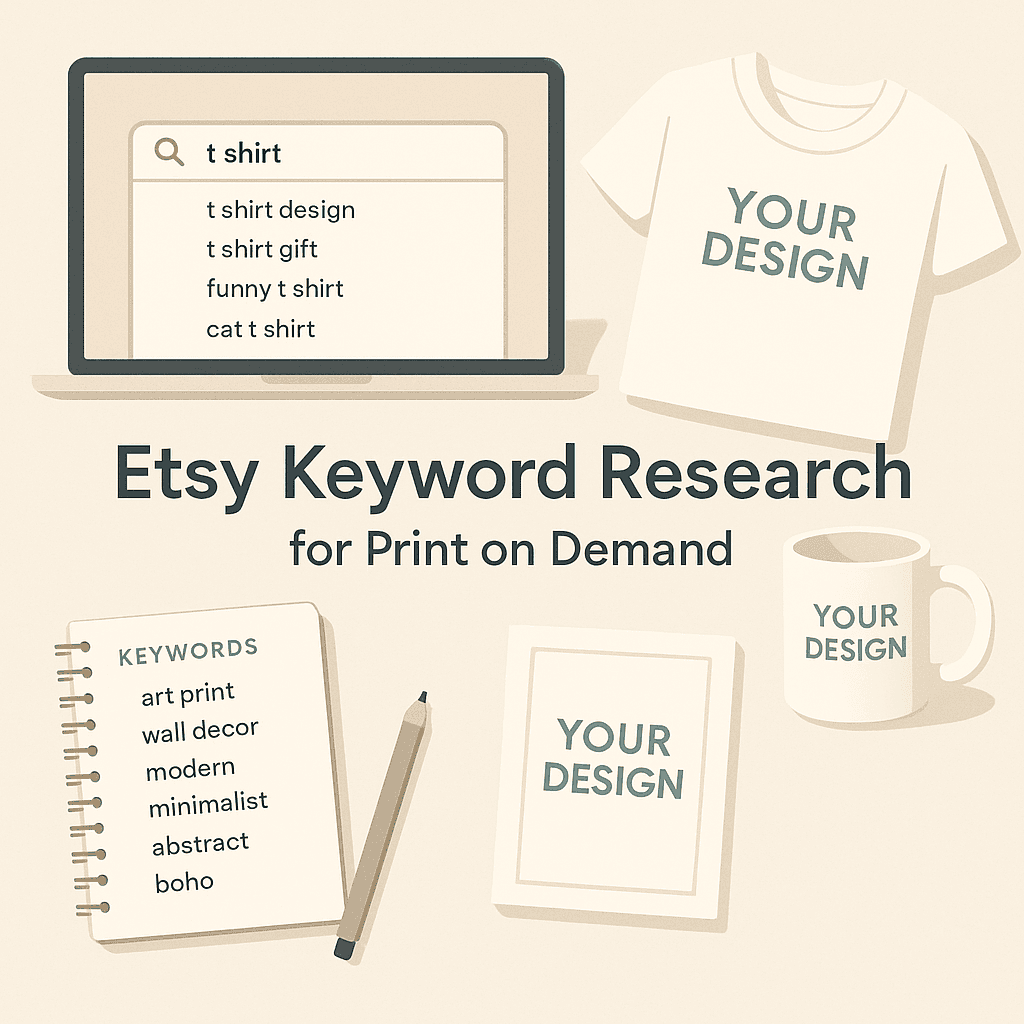
Write down 10 phrases buyers are using. Do not trust your brain. Trust what Etsy buyers type.
Step 2: Choose products that are easy to fulfill and easy to sell
In 2026, you can sell everything. But you should start with stuff that is:
- low return risk
- predictable sizing
- strong gift appeal
- easy to photograph (mockups)
- not too expensive for the buyer
Good starter products:
- Unisex t-shirts (classic, but still works)
- Crewneck sweatshirts (higher AOV, strong in Q4)
- Hoodies (same)
- Mugs (giftable, low sizing issues)
- Stickers (cheap entry product, good add-on)
- Tote bags (gift + lifestyle)
- Hats (can be good, but mockups matter)
Things to be cautious with early:
- all-over print clothing (more complex, more returns)
- expensive wall art unless you understand paper quality and framing expectations
- anything where color accuracy is critical unless your printer is consistent
If you want a simple starting stack: tees + sweatshirts + mugs. That’s enough to build a real shop.
Step 3: Set up your Etsy shop like you want buyers to trust you
A surprising number of POD stores still look unfinished. Etsy buyers notice, even if they do not say it.
Do these basics:
- Shop name: easy to read, not 25 characters, not random letters.
- Banner and logo: simple is fine. Clean, readable.
- About section: write like a person. Why these designs exist. Who they’re for.
- Policies: especially for POD. Be clear about production time, personalization, returns/exchanges.
- Shop announcement: shipping time, personalization instructions, any holiday order deadlines.
- FAQ: sizing help, how personalization works, what to do if something arrives damaged.
And yes, you can be honest. You do not need to pretend you have a warehouse. But you should communicate like a real business.
Step 4: Build a small design system (so you can scale without chaos)
Here’s the part nobody wants to do. It matters.
If you want to scale beyond a few listings, you need consistency:
- fonts you reuse
- layout styles you reuse
- a color palette you reuse
- a couple of “signature” design formats
Not because it looks pretty. Because it helps you create faster, and your shop starts to look cohesive. Shoppers click around your shop. If it feels like random garage sale energy, they leave.
Designs that sell well on Etsy in 2026
You do not need to reinvent art. You need to match what buyers want and make it feel specific.
Proven formats:
- clean typography with one small icon
- “established” year + name personalization
- pet outline + breed name + funny phrase
- location coordinates + minimal design
- job title + funny but not cringey line
- matching family sets for trips, reunions, cruises, Disney type vacations
Also, personalization is still a big lever. Even a simple “name” or “year” variation can increase conversion.
Important note: do not steal. Do not “get inspired” by someone’s exact phrase and layout. Etsy is stricter, and buyers are too. Plus you will hate your business if it’s built on dodging takedowns.
Step 5: Decide how you’re going to handle POD fulfillment and listings
You have two main workflows:
- Manual: you create listings yourself, generate mockups yourself, connect to a POD supplier, fulfill orders when they come in.
- Automated: you use tools to create listings and mockups faster, and fulfillment happens with less hands-on work.
Manual can work when you’re learning. But if you plan to scale, automation is not optional. It’s either that or you burn out.
Where NinjaSell fits (and why it’s relevant in 2026)
NinjaSell is an AI print on demand company focused on Etsy automation for POD.
Here’s the core idea, in plain terms:
- You upload your designs.
- NinjaSell automatically creates optimized Etsy listings, generates mockups, and fulfills print on demand orders.
- It handles fulfillment with white-label shipping, so the buyer experience feels like your brand, not a random supplier.
That matters because the time sink in POD is not “making one design.” It’s making 100 listings that are all properly optimized, consistent, and actually fulfill correctly without you babysitting everything.
In 2026, speed plus consistency is a competitive advantage. Not speed as in spamming. Speed as in being able to test, learn, adjust, and expand without your process collapsing.
Step 6: Create listings that rank and convert (two different jobs)
A listing has two jobs:
- Get found (SEO, relevance).
- Get purchased (photos, clarity, trust).
Most beginners only think about tags. Then they wonder why views do not become sales.
Etsy SEO basics that still matter in 2026
- Use the main keyword in the first part of your title.
- Use clear, specific phrases buyers type.
- Use attributes correctly (color, occasion, recipient, style).
- Fill tags with real phrases, not single words unless needed.
- Avoid keyword stuffing that reads like nonsense.
Instead of:
Funny Dog Mom Shirt Dog Mom Tee Gift For Her Dog Lover Shirt Cute Dog Shirt
Do something like:
Golden Retriever Mom Shirt, Funny Dog Lover Tee, Gift for Retriever Owners, Soft Unisex T Shirt
Not perfect, but cleaner and closer to how people search.
Your photos do most of the selling
Your first photo is everything. Etsy is visual. People scroll like it’s TikTok.
For apparel, a strong set usually includes:
- clean main mockup (front and centered)
- lifestyle mockup (worn, natural light)
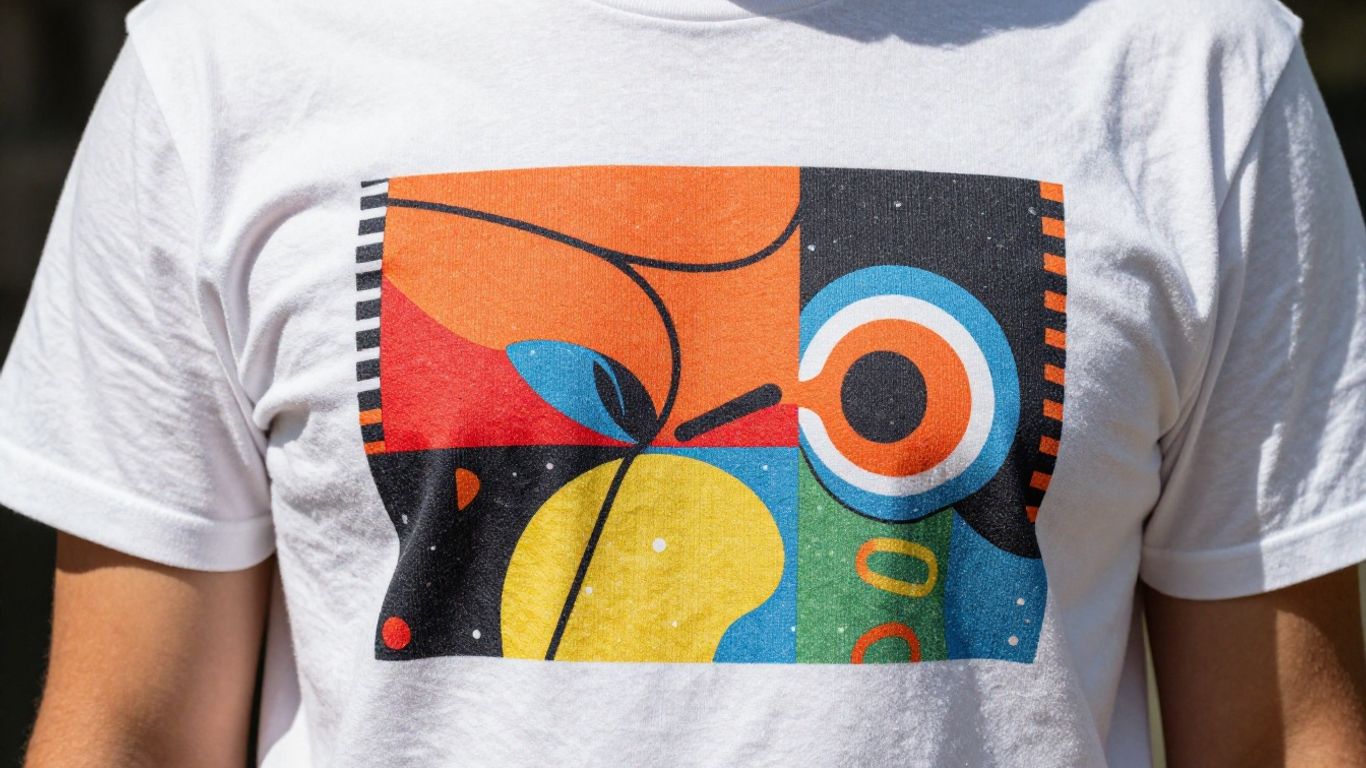
- close-up of print texture
- color options grid
- sizing chart
- “how to order” for personalization
- processing and shipping expectations (simple graphic)
If you’re using a tool like NinjaSell to generate mockups, still review them. Choose mockups that match your niche. A rugged trades niche needs different mockups than a minimalist nursery niche.
Step 7: Price like a business, not like you’re apologizing
A lot of POD sellers underprice because they’re scared.
But Etsy is not only bargain hunters. Etsy is people buying gifts, identity items, and things that feel personal.
When pricing, include:
- base product cost
- printing cost
- shipping (or free shipping baked in)
- Etsy fees
- ad spend (if you plan to use ads)
- room for refunds/replacements
- actual profit
You do not need 70 percent margins. But you do need enough margin to survive mistakes, especially early.
Also. Do not compete with Temu in your head. You are not Temu.
Step 8: Launch with a small collection, not one random listing
The biggest “quiet” factor in Etsy success is shop depth.
If a buyer lands on one listing and likes it, they click your shop. If there’s nothing else, you lose a chunk of potential sales.
A good launch target:
- 20 to 40 listings in one niche, with a consistent style, spread across 2 to 3 products.
Example:
- 15 shirts
- 10 sweatshirts
- 10 mugs
Same niche. Same vibe. Different sayings. A couple personalized options.
You can do more later. But this is enough to trigger data. You need Etsy to see people clicking, favoriting, buying, and staying on your shop.
Step 9: Get your first sales without begging your friends
Your first sales are awkward. You want proof. Etsy wants proof. Buyers want proof. That’s normal.
A few clean ways to get traction:
- Niche social posting: not “buy my shirt.” Post the vibe. The joke. The identity. Then link in bio.
- Pinterest: still underrated for Etsy. Mockups do well. Seasonal boards help.
- Etsy ads (small budget): pick 3 to 5 listings, $3 to $10 per day, run for 2 weeks, then cut losers.
- Seasonal timing: launch giftable items ahead of events. Mother’s Day, Father’s Day, graduation, Halloween, Q4.
If you do Etsy ads, do not advertise everything. Advertise your best converting designs, with strong photos, with clear keywords.
Step 10: Customer service and operations (the stuff that keeps you alive)
POD is simple until it isn’t.
You need a basic system for:
- handling wrong size ordered (usually not your fault, but you need a policy)
- handling damaged items (always replace quickly)
- handling “it did not arrive” messages (track, reassure, resend if needed)
- personalization mistakes (double check the order notes)
If you use white-label shipping through a POD partner, that helps the brand feel consistent. But you still own the customer relationship. Fast replies matter.
Etsy also rewards good customer experience. Fewer cases. Better reviews. Better conversion over time.
Step 11: Scale like a grown up (what scaling actually means)
Scaling is not uploading 500 designs a day.
Scaling is:
- finding 1 design format that sells
- making 20 more variations that target adjacent keywords
- improving photos and descriptions on the winners
- expanding into a second product type for the same audience
- repeating
Here’s a practical scaling loop:
- Identify your top 5 listings by conversion rate.
- Make 5 to 10 variants of each (new phrase, new role, new breed, new location).
- Improve the mockups and first photo on the top 5.
- Add one higher AOV product (crewneck) for the same designs.
- Run ads only to proven listings.
Automation tools can make this loop way easier. Especially when the tool can generate optimized Etsy listings and mockups consistently, and fulfill orders without you doing the order forwarding dance.
That’s basically why a tool like NinjaSell exists.
Common mistakes to avoid (so you do not waste 3 months)
1. Starting with no niche
You end up with a shop that looks like a random thrift store. Etsy does not know who to show it to.
2. Using ugly, generic mockups
This one hurts. Your design could be great and still not sell because the mockup looks fake or low effort.
3. Ignoring sizing and clarity
If buyers are confused, they bounce. Add sizing charts. Make it obvious.
4. Copying best sellers too closely
Besides legal risk, you will always be the cheaper, later version. That’s a bad place to live.
5. Spamming listings without improving the shop
More listings do not fix a low conversion problem. Better listings do.
A simple 7 day plan (if you want structure)
You can stretch this out. But here’s a tight version.
Day 1: Pick a niche. Research keywords. Save 30 listing examples. Note patterns.
Day 2: Choose 2 to 3 products. Set your branding basics. Shop banner, logo, policies.
Day 3: Create 10 designs using 2 consistent formats.
Day 4: Create listings with strong titles, tags, descriptions. Add sizing chart images.
Day 5: Publish. Aim for 15 to 25 listings total.
Day 6: Set up a simple marketing routine. Pinterest pins, 1 niche post a day, maybe small ads.
Day 7: Review. What got clicks? What got favorites? Improve first photos and titles.
If you’re using an automation tool like NinjaSell, your “day 4” and “day 5” can be a lot faster since listings and mockups can be generated automatically, and fulfillment is integrated. Still review everything. But the time savings adds up fast.
Wrap up (what matters most)
Starting a print on demand Etsy store in 2026 is not complicated. It’s just layered.
You need a niche that makes sense. Products that are easy to deliver. Listings that get found and get bought. And a process that does not fall apart when you go from 5 orders a month to 5 orders a day.
If you take one thing from this, make it this:
Build a real shop. Not a pile of random designs.
And if you want to move faster without sacrificing consistency, it’s worth looking at tools that automate the heavy lifting, like NinjaSell doing optimized Etsy listings, mockups, and POD fulfillment with white-label shipping. Because the goal is not to be busy. The goal is to sell.
FAQs (Frequently Asked Questions)
What is the real opportunity when starting a print on demand Etsy store in 2026?
The real opportunity lies in Etsy’s existing buyer base who seek personalized, niche products like gifts, identity items, hobbies, and inside jokes. Print on demand allows you to sell physical products without holding inventory, but success requires avoiding generic designs and keywords, and instead building a legit shop targeting clear niches that sells a few products really well.
How do I choose the right niche for my print on demand Etsy store?
Pick a niche that resonates with you and hits at least two of these: identity (job, hobby, lifestyle), giftability (birthdays, weddings), specific language (insider phrases), or endless variations (names, dates). Avoid overly saturated generic niches unless you have a unique angle. Use Etsy searches to test niches by evaluating top listings, mockup styles, phrases used, and customer reviews for unmet needs.
Which products are best to start selling in a print on demand Etsy store?
Start with products that have low return risk, predictable sizing, strong gift appeal, easy mockups, and affordable prices. Good starter products include unisex t-shirts, crewneck sweatshirts, hoodies, mugs, stickers, tote bags, and hats. Be cautious with complex items like all-over print clothing or expensive wall art unless you understand their specifics.
How should I set up my Etsy shop to build buyer trust for print on demand items?
Create a professional-looking shop with an easy-to-read name and clean banner/logo. Write an engaging About section explaining your designs and target audience. Clearly state policies about production time, personalization, returns/exchanges. Use the shop announcement for shipping times and deadlines. Include an FAQ addressing sizing, personalization process, and damaged items. Communicate honestly like a real business.
Why is it important to avoid generic designs and keywords on Etsy in 2026?
Etsy’s search algorithm has improved at detecting duplication and buyers quickly decide which listings to engage with. Generic designs and keywords lead to listings that blend in with thousands of others making it hard to stand out. Unique designs targeting clear niches with fresh keywords increase your chances of ranking higher and converting browsers into buyers.
What is the benefit of building a small design system for scaling my print on demand shop?
A small design system helps you maintain consistency and efficiency as you grow your product range without chaos. It enables easier creation of new variations while preserving brand identity. This systematic approach supports scaling your shop sustainably by focusing on quality over quantity rather than uploading thousands of random designs.